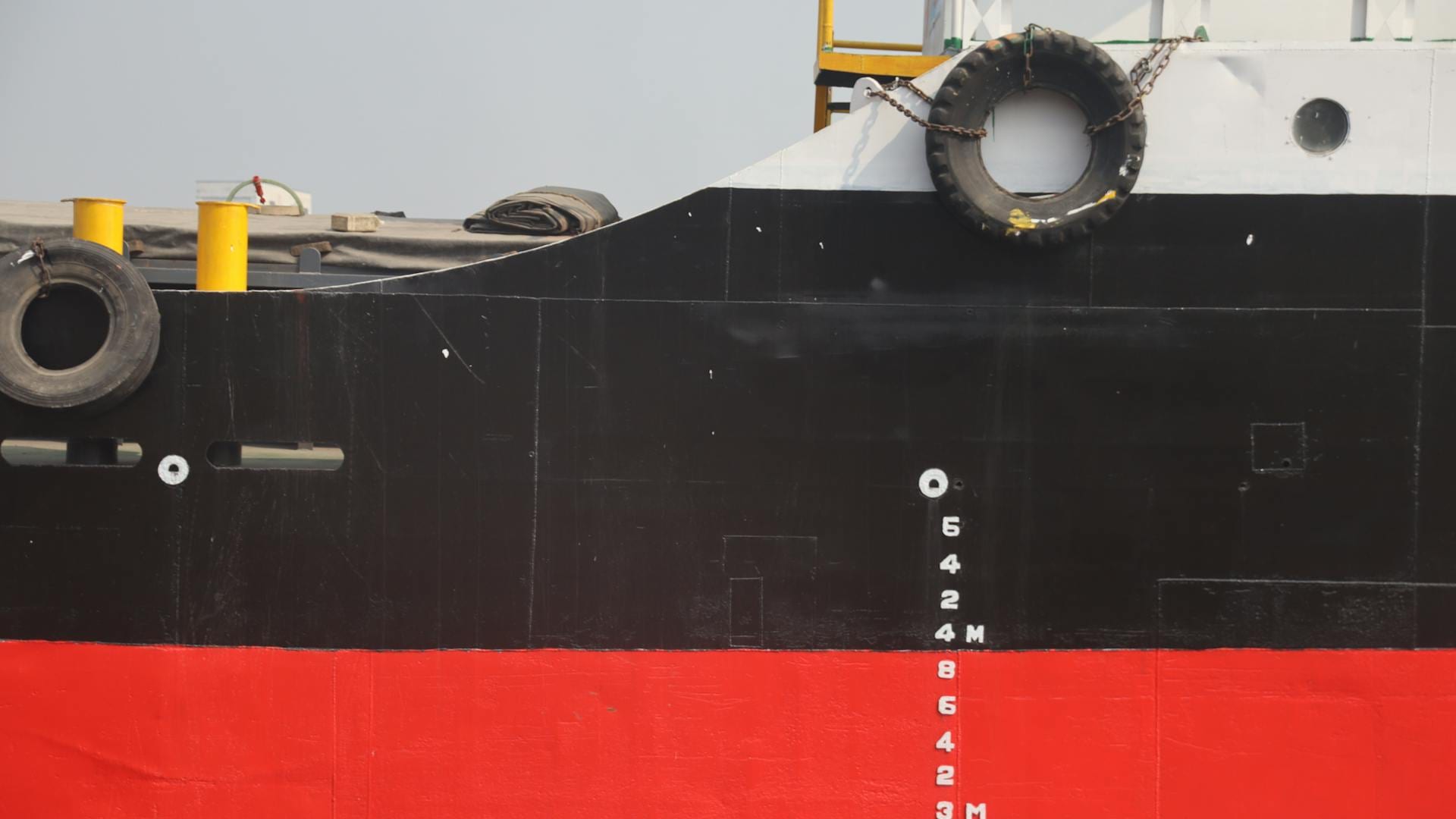
Antifouling paints, add the coral endpoint your BPR dossier is missing
For antifouling paint manufacturers and applicators carrying a BPR dossier through PT21 renewal. We add coral as a complementary species to the marine ecotox panel you already run, acute + chronic on invertebrates, algae, fish, without displacing any of it.
Why now
Copper PT21 actives expire 30 June 2028.
Under the 2025 Commission Implementing Decisions, copper oxide, copper thiocyanate, copper pyrithione, and zineb are approved only until 30 June 2028. The renewal evaluation runs ahead of that date, and a 3-month chronic lead time means coral data has to be started ahead of the cycle that requires it.
The EU BPR PT21 environmental risk assessment already flags DCOIT, Cu₂O, zineb, and other antifouling biocides at risk-quotient > 1 for coastal ecosystems, yet coral is still not a panel endpoint. The window to get ahead of that is now.

What we test

Antifouling biocide leachate
Copper oxide, copper thiocyanate, copper pyrithione, zineb, DCOIT, tested as released from the coating under realistic exposure.
Complete paint formulation
The paint as it ships, not just the active. Coral response is compound-specific, and the formulation's eco-tox outcome is not predictable from the active alone.
Foul-release / biocide-free
Silicone foul-release and biocide-free product lines have a coral story to make too, the "no impact" assumption deserves to be verified, not asserted.
Hull-cleaning effluent
For in-water cleaning operations: rangefinding acute EC10 across 6 concentrations to inform the in-water vs dry-dock procurement decision per port.
Methodology and endpoints

Acute
96-hour contact on biocide leachate or formulation. Rangefinding EC10 / EC50 across 6 concentrations.
Endpoints: EC50, LOEC, NOEC.
Chronic
3 months exposure + 1 month recovery on biocide leachate. Continuous-exposure protocol calibrated to BPR dossier needs.
Endpoints: EC10, EC50, chronic PNEC.
Acute pre-validation across 13 laboratories in 6 European countries is documented in Bao et al. 2024 (Toxics 12(1):1).
Who this is for

- • R&D leads and BPR dossier owners at antifouling paint manufacturers.
- • Environmental and regulatory leads at coating applicators preparing for the PT21 renewal cycle.
- • Marine ingredient suppliers carrying biocide actives through registration.
Frequently asked questions

Does ReefTox replace our existing provider for antifouling ecotox?
No. ReefTox adds coral as a complementary species to the marine ecotox panel you already run, acute and chronic on invertebrates, algae and fish. We fill the missing coral endpoint without displacing any of the existing program.
What antifouling materials do you test on coral?
Antifouling biocide leachate (copper oxide, copper thiocyanate, copper pyrithione, zineb, DCOIT), the complete paint formulation as it ships, foul-release and biocide-free product lines, and hull-cleaning effluent, each tested under realistic exposure.
Why start coral testing ahead of the BPR PT21 renewal?
Copper PT21 actives are approved only until 30 June 2028 under the 2025 Commission Implementing Decisions, and the renewal evaluation runs ahead of that date. A 3-month chronic test has a built-in lead time, so the coral data and chronic PNEC have to be started before the cycle that asks for them.
Scope your antifouling program with us.
Every marine engagement starts with a scoping call. We map your BPR dossier to the coral protocol and the chronic PNEC that defends it.
